
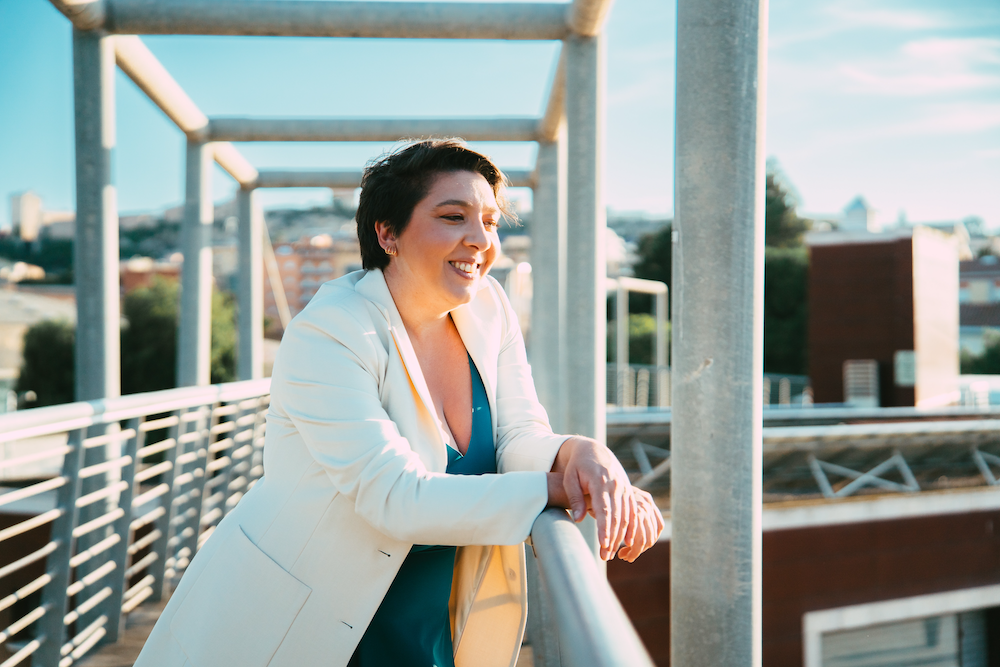
Psycholinguist Eleonora Marocchini has dedicated her research career to something most of us take for granted: understanding one another. With a background in both psychology and linguistics, she investigates how we interpret what isn’t said – and why communication often falters between people with different neurotypes. Her work sheds new light on conversation, empathy, and the role of science in society.
How do we really know what someone means – and what happens when we don’t? These are the questions that drive Eleonora Marocchini, a researcher affiliated with the independent academic network IGDORE. Her academic background spans psychology, cognitive science, and linguistics.
“My papers have focused on how we understand – or fail to understand – indirect and implicit meaning in conversation. What cognitive processes are involved in interpreting what someone means but doesn’t say directly? And which social and neuropsychological factors influence our success?” she explains.
Her research initially followed a more traditional path in clinical autism studies. But everything changed when she began communicating science online and connected with autistic communities. That encounter brought new perspectives to the phenomena she was studying – leading to a shift in both her methods and worldview.
“I realized that communication between different neurotypes – for example, an autistic and a non-autistic person – is more like intercultural communication than we think. It’s more helpful to assume we don’t understand each other and ask for clarification, rather than assuming we do,” she says.
Research with, not just on
Meeting autistic groups inspired Eleonora to move away from the conventional “research on” approach toward a more collaborative “research with” perspective. She began working with qualitative methods and involving participants as co-creators in the research process.
This approach also shapes her thinking about fair data – one of her strongest passions.
“Data is only fair if participants give truly informed consent, feel that the research is relevant to them, and ideally have a say in how it’s carried out. That makes our research not just more ethical, but also more valid,” she says.
Eleonora is currently designing a study on quality of life among adults with autism and/or ADHD, and their views on the neurodiversity movement.
“Some clinicians worry that the movement may discourage people from seeking support, while advocates say they feel better once they accept their condition as part of their identity. I really want to understand that dynamic,” she says.
She also has several research ideas related to the “double empathy problem” – the theory that communication issues don’t lie within one individual, but stem from mutual misunderstanding.
After completing her PhD, Eleonora was too exhausted to pursue traditional postdoctoral positions. Instead, she joined IGDORE – a global community for independent researchers.
“I wanted an affiliation that didn’t depend on a contract, and I wanted to stay connected to other scientists in different fields and countries. Through IGDORE, I can continue doing research on my own terms,” she says.
Science that’s open to everyone
Eleonora is a strong advocate for open science. Since her first lead-author study, she has published her data and code via the Open Science Framework and consistently aims for open access publication.
“It just doesn’t make sense to lock away knowledge. Science should be accessible to everyone – and that’s part of why I also work in science communication,” she says.
While not all her projects are funded yet, Eleonora remains optimistic about the future.
“Understanding between people is not something we can take for granted. But through research – and a willingness to listen – we can move closer to it.”