
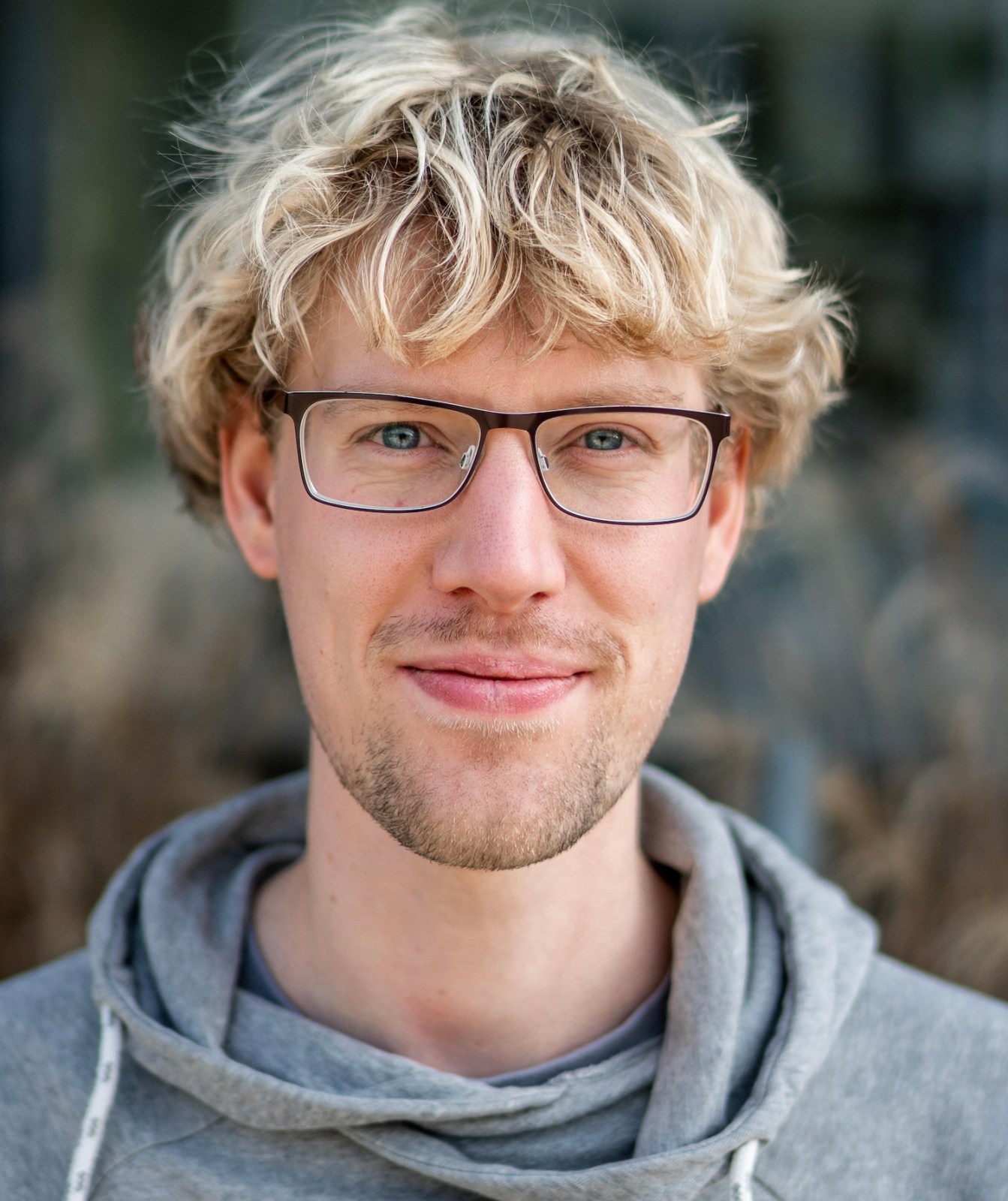
When Robert Giessmann wanted to publish his research, he discovered there was no such place for his kind of results. His solution? To build an open database filled with thermodynamic data on enzymatic reactions – accessible to researchers worldwide. Through digitization, networking, and a passion for open knowledge, he is now creating an invaluable tool for the future of research.
If you’ve ever eaten a piece of bread and wondered how your body converts food into energy, you’ve encountered the fascinating world of enzyme-catalyzed reactions – even if you didn’t realize it. Enzymes are biological catalysts, tiny molecular machines that speed up chemical reactions in the body. Without them, we wouldn’t be able to breathe, digest food, or even think.
Robert Giessmann, a chemist and bioprocess engineer, has spent years collecting and organizing data on what enzymes do. He aims to document the physical constants that govern enzyme-catalyzed reactions – values such as enthalpy (the heat change during a reaction) and equilibrium constants (a measure of how much of a chemical reaction occurs). His goal? To make this knowledge easily accessible to researchers worldwide.
“Enzymes can convert chemicals into one another. If you eat glucose, you will exhale carbon dioxide and use the energy from that reaction to power your body. I want to collect this fundamental data and make it available to everyone,” he says.
From Chemistry to Biology – and on to Open Databases
Giessmann began his journey in chemistry but never quite felt at home in the culture of the field. Instead, he was drawn to the practical applications of biology, leading him to pursue a PhD in bioprocess engineering. He spent some time working at the pharmaceutical giant Bayer, but continued to drive his own research projects in his free time.
“When I wanted to publish the research that wasn’t directly related to my job at Bayer, I couldn’t use the company’s name as my affiliation. Suddenly, I was academically ‘homeless,’” says Robert Giessmann.
That’s when he discovered IGDORE, an organization of researchers outside traditional universities and companies. Here, he found a platform without institutional restrictions.
Thermodynamics – Why Does It Matter?
Thermodynamics is a branch of physics and chemistry that describes how energy flows and transforms. For enzymes, this means that every chemical reaction has fundamental properties that determine how it occurs – such as how much energy is needed to make the reaction occur at all, or how much energy needs to be consumed or released when the reaction occurs.
“Understanding these constants is crucial for everything from drug development to environmentally friendly biotechnological processes. If we can collect and make these data available, scientists and engineers can develop better and more sustainable solutions more easily,” says Robert Giessmann.
But gathering these values is no easy task. The results of experimental measurements are scattered across scientific papers, some dating back decades.
An Open Database for the World
Since 2019, Giessmann and a team of other researchers have been working to digitize thermodynamic data from old research publications. In a first step, they re-curated over 1,600 tables of data from a series of reviews consisting of 278 pages of dense print and made them available online.
“We started with a simple CSV file, then moved it to a Google spreadsheet, and now we have a website where users can easily search through the data,” he says.
His database, openTECR, is entirely open and accessible to researchers, students, and anyone interested. Additionally, he has created an open discussion group where scientists worldwide can contribute their own measurements and insights.
“The most fascinating part is that when we host hackathons and workshops online, researchers from all over the world join in to help – from Argentina over Israel to India. It shows how powerful collaboration can be in the research community.”
FAIR Data and the Future of Research
Giessmann is also involved in the movement for FAIR data, an initiative to make research data Findable, Accessible, Interoperable, and Reusable. He helped develop the FAIR Cookbook, a guide on how scientists can structure their data to be shared and used by others.
“FAIR data is a fantastic concept, but getting researchers to actually follow the principles is a challenge. Many still see each other as competitors rather than collaborators,” says Robert Giessmann.
Despite this, he remains optimistic. By working openly and sharing his research, he hopes that more scientists will see the benefits of collaboration and building on each other’s work rather than keeping data secret.
A Project That’s Changing Science
Robert Giessmann’s work may seem niche and highly technical, but it has significant implications. By collecting and distributing fundamental chemical data, he enables research in a wide range of fields – from medical science to sustainable chemical production.
And the best part? He’s doing it for everyone, without restricting access to a select few.
“What makes me most grateful is seeing researchers from all over the world contributing. It gives me hope for what we can achieve together.”